
Problem
Bankers at a top 5 investment bank weren’t using the CRM their employer provided for them to track their sales leads and the bank didn’t know why.
The bank hired Lab49 to do research into why adoption was so low and how we could improve it.
Research Phases
This project occurred in 2 phases:
Phase 1: Why was CRM usage was low and how can we increase it? Based on our research findings, the bank decided to build a new CRM mobile app.
Phase 2: Who our target user group was and what they needed from a new mobile app
Methods
Interviews with > 30 users
Survey with 191 user responses
Heuristic evaluation of current CRM
Persona creation
Journey mapping
Workflow mapping of key workflows
Defining MVP requirements
My Role
I was part of a team of 3 designers. In the first phase, I led heuristic evaluation and collaborated in interviews and surveys. I led and performed all research activities in the second phase.
Phase 1: Why Low Usage and How to Fix It?
Research Questions
Why don’t our users choose to use the CRM?
Are quick usability fixes likely to drive adoption, or is it necessary to invest in net new product offerings?
Timeframe: 8 Weeks
My Role: I led our expert evaluation and participated in user interviews and survey.
User Interviews
To better understand the problem, we initially conducted 12 user interviews.
Research focused on pain points with the existing CRM and their impact on users’ goals.

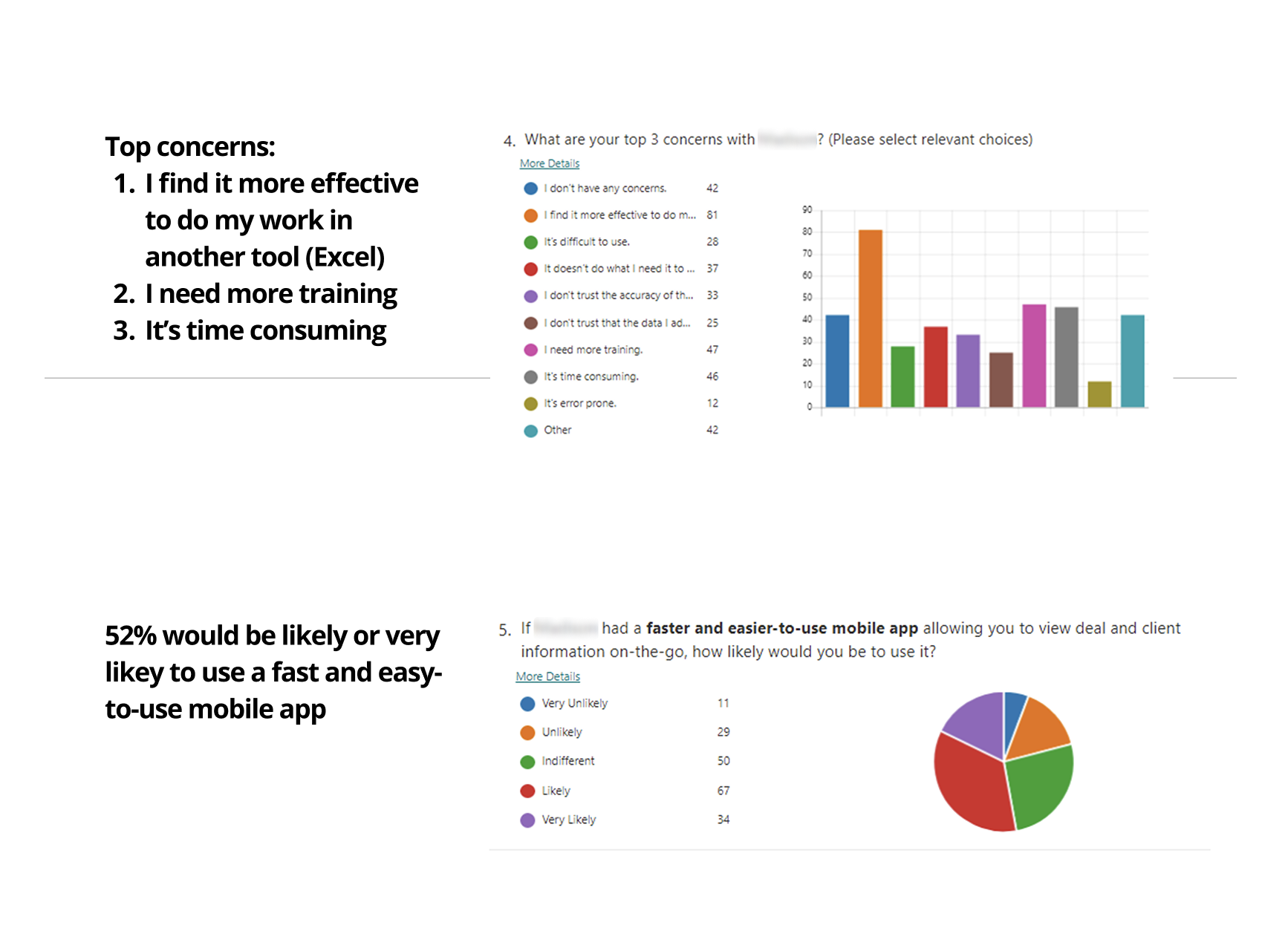
User Survey
We sent a 13 question survey to 1286 potential CRM users across the bank.
Major user groups included Senior Bankers and their Junior Banker team members.
We received 191 responses.
Heuristic Review
We conducted our own expert heuristic evaluation of the existing CRM UI to identify the scope of usability problems.
In this webinar, I presented the Lab49 UX Scorecard I created, which we used in this project.
Findings: CRM Lacks Valuable Features
Our expert evaluation and user interviews identified that there were major usability and efficiency issues, and that users didn’t trust the data to be accurate or complete.
More significantly, though, our interviews and surveys discovered that users did feel the CRM had features that were relevant or helpful to their work. This was particularly true with the most important users, Senior Bankers.
We concluded that fixing usability issues without adding more valuable features would not improve adoption.
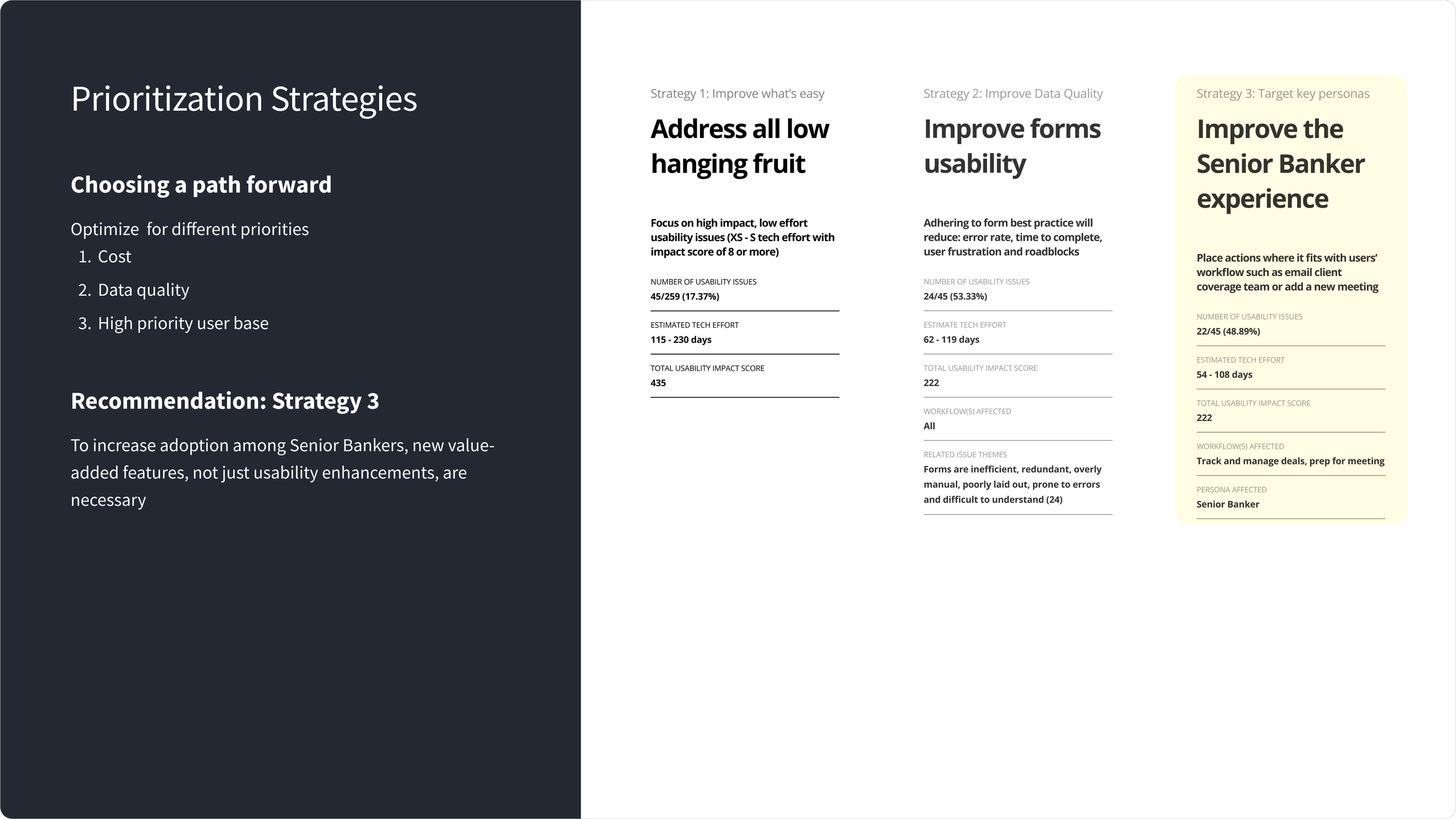
Recommendations
We recommended 3 possible paths forward, each optimizing for a different business goal.
Our research suggested that Senior Bankers would only begin using the CRM at significant rates if they had new channels and features that added value.
Based on this, we recommended pursuing a strategy that targeted Senior Bankers’ needs, beginning with a new mobile app.
Phase 2: Who are Senior Bankers and what do they need?
We were rehired to design a mobile app. I led an 8 week discovery research effort to deeper understand who users were and what they needed from the app.
Research Questions
Who are Senior Bankers? What are their overall goals and their core day-to-day activities?
What are the different attitudes we see re: CRM?
What features would they need in a simple MVP of a mobile app?
Timeframe: 8 Weeks
My Role: I led all Discovery research strategy and research activities.
User Interviews
We conducted 20 individual interviews with our target users (Senior Bankers) and 2 focus groups with Junior Bankers., as they collaborate with Senior Bankers.
Research sought to understand our users’ journeys, day-to-day activities and workflows, pain points, and needs.
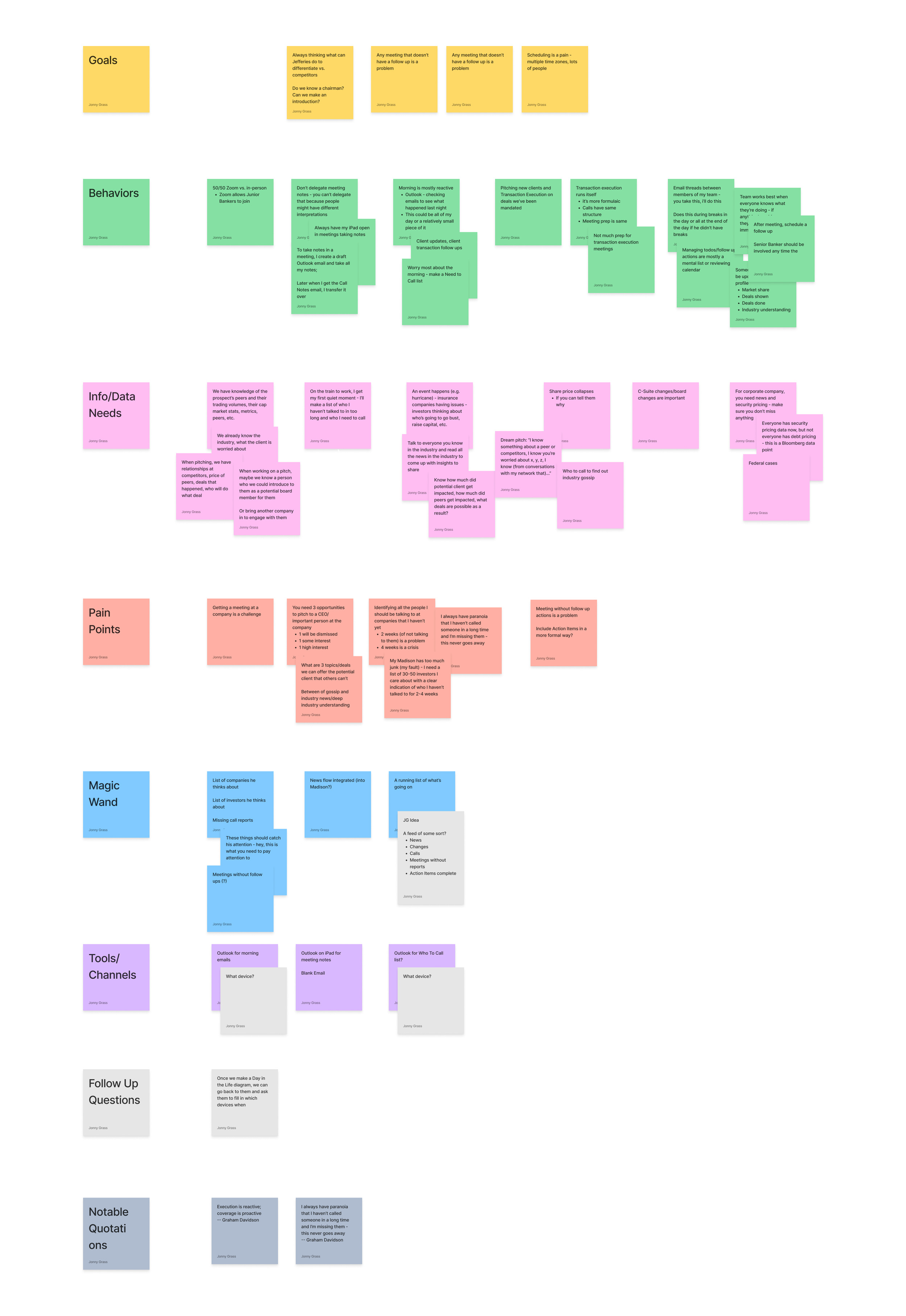
Findings: There was appetite for CRM
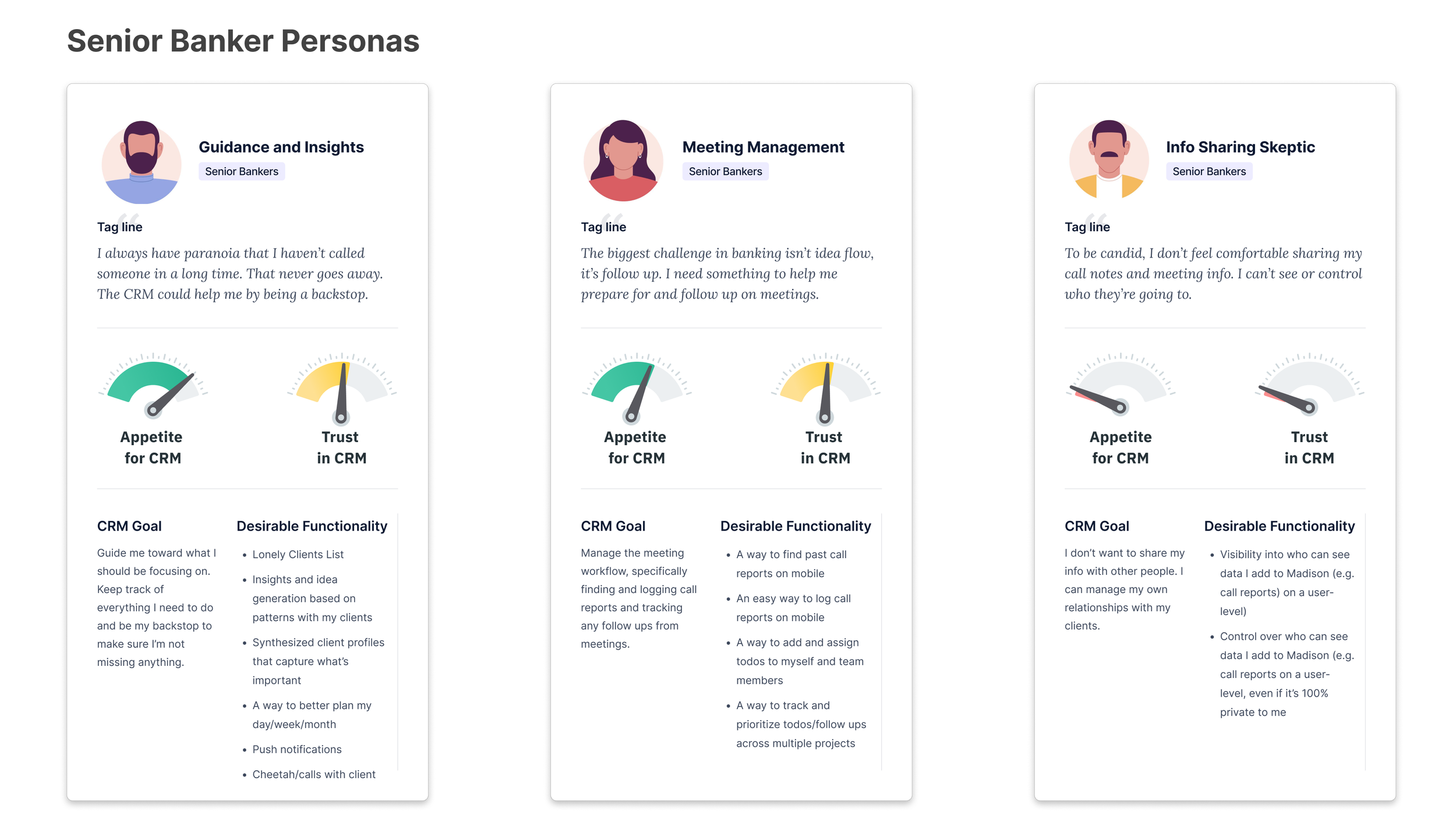
We identified three categories of Senior Banker users, based on their attitudes toward and needs from the CRM. The 3 key types were:
Users who wanted the CRM to improve all of their workflows
Users who wanted help only managing their meetings
Users who had major concerns about information privacy.
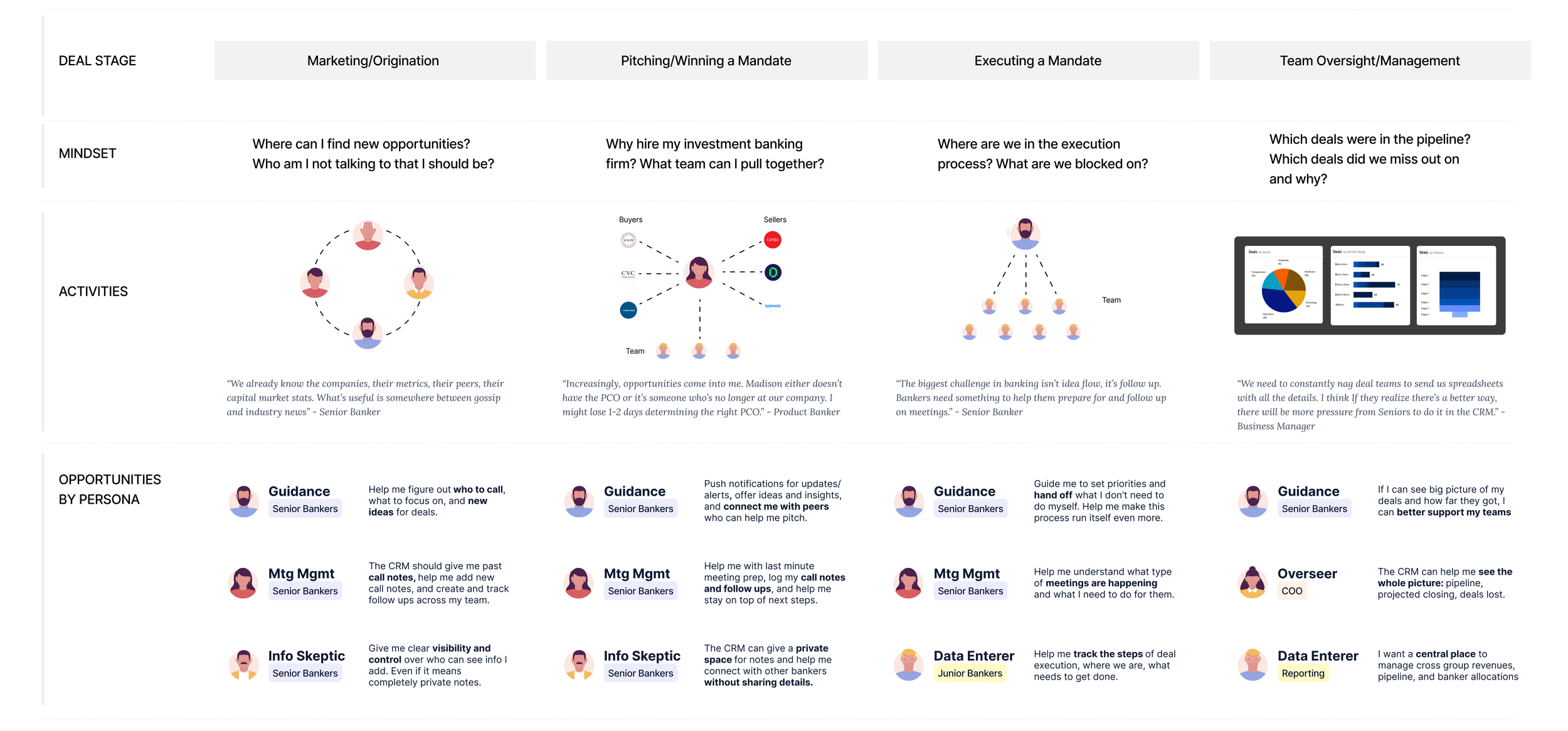
Findings: The Deal Lifecycle drives workflow
All of our users’ activities revolve around the phases of the deal lifecycle.
A CRM can help bankers manage activities such identifying leads for deals, preparing for meetings, and quickly capturing notes during and after meetings.
Mobile App: Meeting prep and meeting notes
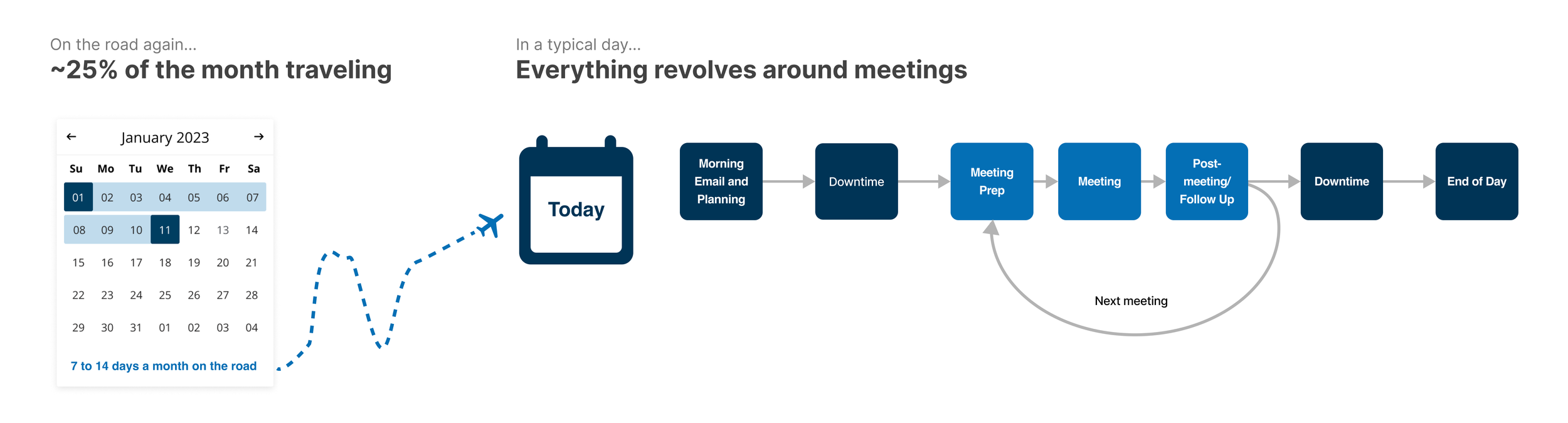
Senior Bankers at this firm spend about 25% of their time traveling to meet people at companies they’re pitching deals to.
As salespeople and relationship-builders, their days revolve around meetings: planning for them and debriefing from them to plan the next steps.
Requirements
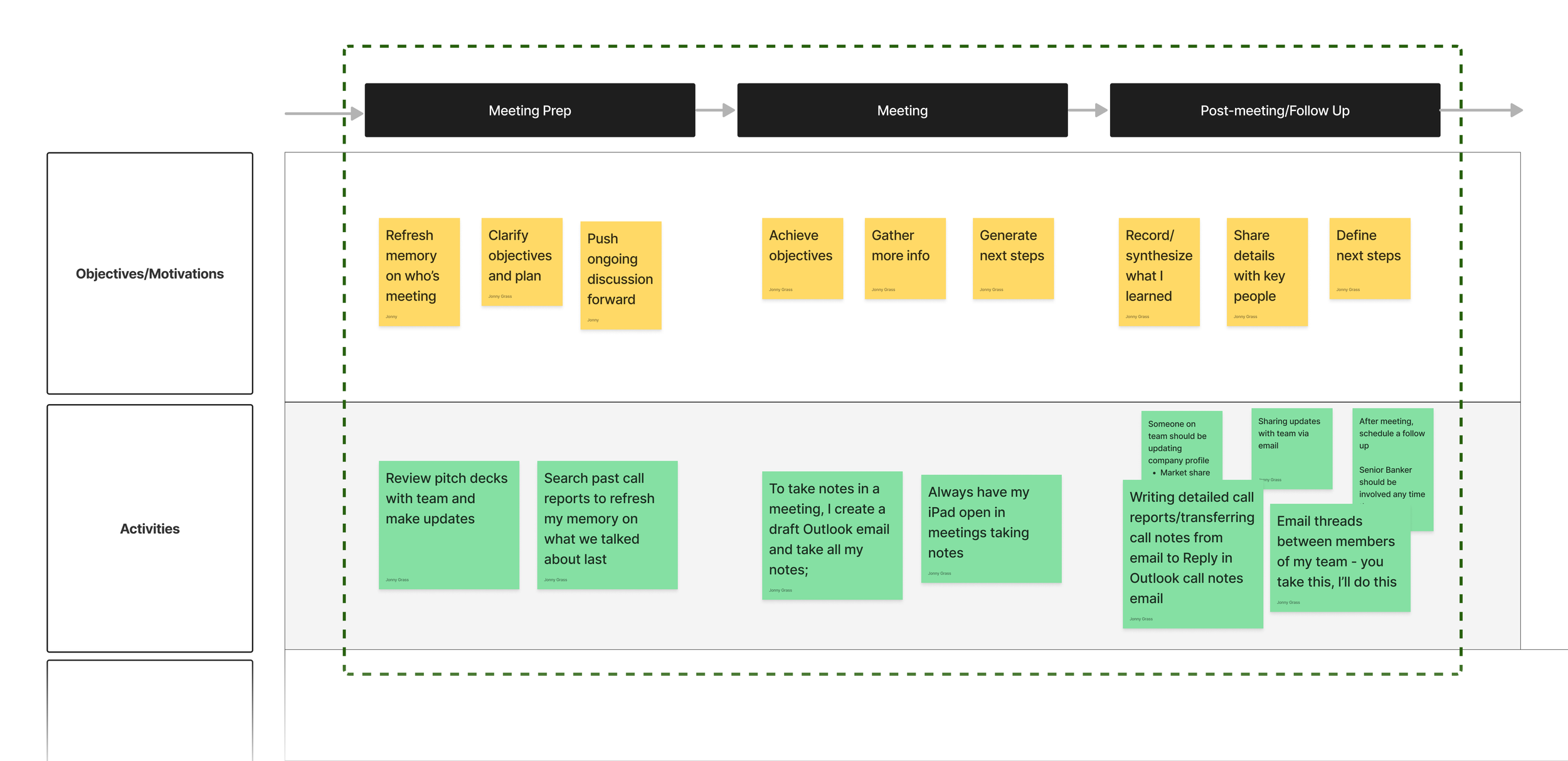
Based on this research, Design and Product defined the MVP scope to focus primarily on meeting-related use cases.
The core functionality of the MVP focused on:
Preparing for a meeting by reviewing its details, particularly call reports from past meetings with the client.
Logging a call report during or after a meeting to capture notes for later.
Outcomes
This research was followed by a 2 months iterative design phase with regular design reviews with users.
This research also formed the foundation of a 3.5 year (ongoing) partnership with this client. As the UX Lead, I have grown the team from 1 to 9 designers in that time.
This engagement has generated millions of dollars of steady revenue for my company and has led to more than 5 net new products for the bank, serving 3 internal business groups.